




Blog
Comfortable Office Chair Features Every Worker Needs

If you spend most of your day at a desk, your office chair is the piece of furniture your body relies on the most. A poor chair can leave you with a stiff neck, an aching lower back, and a mind that keeps drifting from the task at hand. A good one quietly supports you for hours, so you can focus on your work instead of your discomfort.
But with so many options on the market, how do you know what actually matters? This guide breaks down the essential features of a comfortable office chair, explains why each one counts, and helps you choose the right chair for your body and your workday.
Why Your Office Chair Matters
Sitting for long periods puts steady pressure on your spine, hips, and legs. Over time, bad seating habits can contribute to back pain, muscle tension, and fatigue. A well-designed chair does not eliminate the need to move, but it helps your body stay in a more natural position and reduces unnecessary strain.
Comfort also affects performance. When you are not distracted by aches or constantly adjusting your posture, it is easier to concentrate, stay engaged, and finish your work with more energy.
Essential Comfortable Office Chair Features
1. Adjustable Seat Height
This is the most basic and important adjustment. When you sit, your feet should rest flat on the floor, with your knees at roughly a 90-degree angle and your thighs parallel to the ground. A pneumatic or gas-lift lever lets you raise or lower the seat to match your desk and your height.
What to look for: a smooth, easy-to-reach lever and a height range that suits both your body and your desk.
2. Lumbar Support
The lower back naturally curves inward, and a chair that supports this curve helps reduce strain. Lumbar support can be built into the backrest or adjustable, allowing you to move it up, down, or in and out to fit your spine.
What to look for: adjustable lumbar height and depth, especially if several people share the chair or you have specific comfort needs.
3. Seat Depth and Width
The seat should be deep enough to support your thighs without pressing on the back of your knees. A good guide is to leave a gap of two to three finger widths between the seat edge and the back of your knees. The seat should also be wide enough to be comfortable without feeling cramped.
What to look for: a seat depth adjustment, which allows the chair to fit people of different heights and leg lengths.
4. Backrest Height and Recline
A backrest that supports your whole back, including your shoulders, helps you stay upright without effort. A reclining function lets you lean back slightly, which can relieve pressure on your spine during long stretches of work or short breaks.
What to look for: a backrest tall enough to support your upper back, a smooth tilt mechanism, and a recline lock to hold your preferred position.
5. Adjustable Armrests
Good armrests support your forearms so your shoulders can stay relaxed. They should let your elbows rest at about a 90-degree angle while your wrists stay in a neutral position at your keyboard.
What to look for: height-adjustable armrests, and for greater flexibility, ones that also move in, out, or pivot (often called 3D or 4D armrests).
6. Breathable and Supportive Materials
The material affects both comfort and how well the chair lasts.
- Mesh: Breathable and cooling, a strong choice for warm environments and long days.
- Fabric: Soft, comfortable, and available in many colors, though it can hold more heat.
- Leather and faux leather: Smooth and professional in appearance, easy to wipe clean, but can feel warm.
- Foam padding: High-density foam keeps its shape better and offers longer-lasting support than soft, low-grade foam.
7. Headrest and Neck Support
A headrest is especially helpful if you recline often or spend long hours in front of a screen. It supports your neck and head, allowing the muscles of your upper body to relax.
What to look for: a headrest you can adjust in height and angle, so it supports your neck without pushing your head forward.
8. Stable Base and Quality Casters
A sturdy five-point base keeps the chair stable and safe. The casters, or wheels, should roll smoothly and suit your floor type: softer wheels for hard floors, and harder wheels for carpet.
What to look for: a solid base made from strong materials, and casters that move easily without sliding when you sit down.
9. Seat Tilt and Synchro Mechanisms
A synchronized tilt mechanism moves the seat and backrest together as you recline, keeping your body supported in a natural position. Some chairs also let you tilt the seat forward slightly, which can help you sit upright during focused tasks.
What to look for: a mechanism that feels smooth, supportive, and adjustable to your body weight.
10. Weight Capacity and Build Quality
A comfortable chair has to be strong as well. Check the stated weight capacity and make sure it comfortably exceeds the weight of the person who will use it. Good build quality, such as a strong frame, reliable gas lift, and quality stitching, helps the chair last through daily use.
What to look for: a clear weight rating, durable components, and a warranty that covers the mechanical parts.
Features Comparison at a Glance
| Feature | Why It Matters | What to Check |
|---|---|---|
| Seat height adjustment | Keeps feet flat and knees at a comfortable angle | Smooth lever, suitable range |
| Lumbar support | Supports the natural curve of the lower back | Adjustable height and depth |
| Seat depth | Supports thighs without pressure behind knees | Adjustable slide, 2 to 3 finger gap |
| Armrests | Relax shoulders and support forearms | Height and width adjustment |
| Backrest and recline | Maintains posture and relieves spinal pressure | Tilt lock, upper-back support |
| Material | Affects comfort, temperature, and durability | Breathable mesh or quality foam |
| Base and casters | Provide stability and safe movement | Five-point base, floor-appropriate wheels |
How to Choose the Right Chair
Think About Your Day
If you sit for six to eight hours, choose a chair with more adjustability and strong lumbar support. For short sessions, a simpler design may be enough.
Consider Your Body
Chairs are not one size fits all. Taller, shorter, or broader users may need a chair with a larger or smaller seat, a taller backrest, or a higher weight rating.
Match Your Desk and Space
Make sure the chair height works with your desk, and that the chair fits comfortably in your room. In small spaces, choose a compact design without oversized armrests or wide bases.
Try Before You Buy
Whenever possible, sit in the chair for at least several minutes. Adjust every control, lean back, and check that it feels supportive. If you are buying online, look for a reasonable return policy and a clear warranty.
Tips for Sitting Comfortably All Day
- Sit back in the chair so your back is supported by the backrest.
- Keep your feet flat on the floor or on a footrest.
- Align your screen so the top is near eye level, avoiding neck strain.
- Keep your elbows close to your body at about a 90-degree angle.
- Change position often. Even the best chair works better when you move, stand, and stretch regularly.
- Take short breaks every 30 to 60 minutes to walk or loosen up.
Common Mistakes to Avoid
- Choosing by appearance alone: A stylish chair that does not fit your body will not be comfortable.
- Ignoring adjustability: The more you can customize a chair, the better it can match your needs.
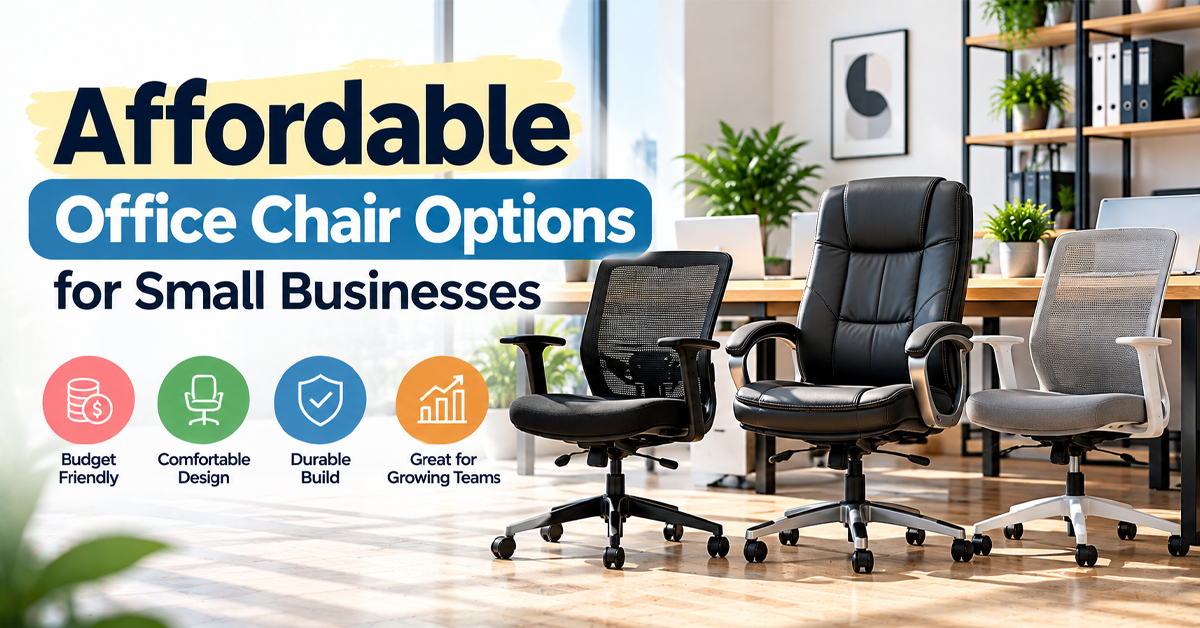
- Buying the cheapest option: Very low-cost chairs often have weak mechanisms and thin padding that wear out quickly.
- Setting it once and forgetting it: Revisit your chair settings from time to time as your tasks and habits change.
Conclusion
A comfortable office chair is an investment in your health, focus, and daily wellbeing. By looking for adjustable height, solid lumbar support, a well-fitted seat, supportive armrests, and quality materials, you can find a chair that supports you through the longest workdays. Take the time to match the chair to your body and your routine, and you will notice the difference in how you feel and how well you work.