




Blog
Affordable Office Chair Options for Small Businesses

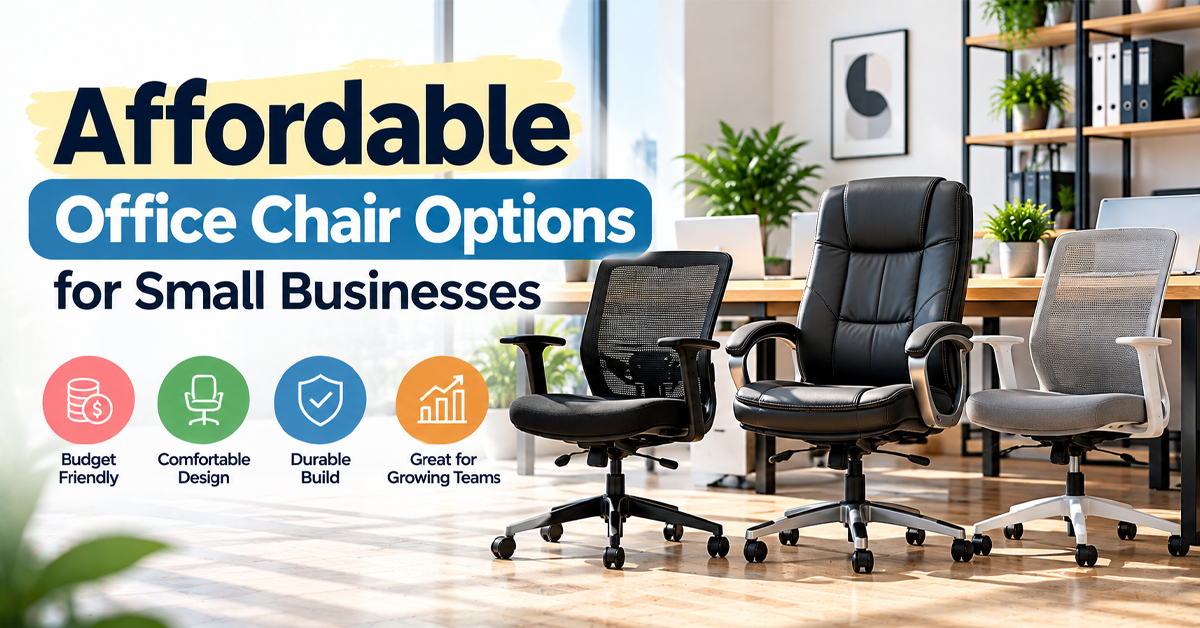
When you run a small business, every purchase has to earn its place. Office chairs are an easy item to cut corners on, but they are also one of the few purchases that directly affect how your team feels, how long they stay focused, and how much time is lost to discomfort and sick days. The good news is that you don’t need a premium budget to buy good seating. You need to know where to spend and where to save.
Why Chairs Deserve a Place in Your Budget
A cheap chair that fails within a year costs more than a mid-priced chair that lasts five. Poor seating also shows up in hidden ways: staff shifting constantly, taking extra breaks to stretch, or complaining of back and neck pain. For a small team, even one person working at reduced capacity is noticeable. Treat chairs as a working tool, not just furniture.
Set a Realistic Budget
Rather than picking a number at random, work backwards from usage:
- Full-time desk staff (6 to 8 hours a day): Spend the most here. Prioritize adjustability and durability.
- Part-time or occasional workstations: A simpler chair is fine.
- Meeting rooms and reception: Focus on appearance and basic comfort over deep ergonomic features.
Dividing your budget by tier like this avoids overspending on chairs that rarely get used and underspending on the ones used all day.
Affordable Chair Types That Work
Mesh Task Chairs
These are the workhorses of budget seating. Mesh backs are breathable, lightweight, and well suited to warm workplaces. Entry-level models usually offer seat height adjustment, tilt, and basic lumbar shaping. They are a strong choice for general staff.
Fabric Task Chairs
Padded fabric chairs offer a softer feel and are often cheaper than leather options. Look for tightly woven, stain-resistant upholstery, since cheaper fabrics wear and stain quickly in busy offices.
Basic Ergonomic Chairs
Many manufacturers offer stripped-down ergonomic lines with adjustable armrests, lumbar support, and tilt tension at a fraction of the price of flagship models. These are often the best value for employees who sit all day.
Stackable and Visitor Chairs
For waiting areas, training sessions, and meeting rooms, stackable chairs are inexpensive and save space. They are not designed for eight-hour days, so keep them out of main workstations.
Drafting and High Stools
If staff work at tall counters or standing-height benches, a drafting chair with a foot ring is the safe, affordable option.
Where to Buy Without Overpaying
Office furniture wholesalers and local suppliers: Buying several chairs at once often earns bulk discounts, and you can sit in them before ordering.
Online retailers: Wider selection and competitive pricing, but check return policies carefully since you can’t test comfort in advance.
Refurbished and second-hand office furniture: Companies that downsize or close often sell high-quality commercial chairs at steep discounts. Reputable refurbishers clean, repair, and warranty these chairs, which can get you premium brands for budget prices.
Seasonal and clearance sales: Retailers often discount last year’s models. The differences from the current line are usually minor.
What to Prioritize on a Tight Budget
Not every feature is worth paying for. If you have to choose, spend on these first:
- Adjustable seat height: Non-negotiable for fitting different body sizes.
- Lumbar support: Even basic shaping is better than a flat backrest.
- A sturdy base and casters: A five-point base is more stable and safer than cheaper alternatives.
- Quality gas lift cylinder: This is the part that most often fails. Look for a recognized safety certification.
- Seat padding that holds its shape: Dense foam outlasts soft, thin cushioning.
Features you can often skip at lower budgets include headrests, heavily padded armrests, synchronized multi-position tilt, and decorative styling.
Common Mistakes to Avoid
- Buying the cheapest option for everyone: Staff who sit all day need better chairs than occasional users.
- Ignoring weight ratings: Check the maximum load, and consider team members of different sizes.
- Skipping the trial: If possible, order one sample chair and let a couple of employees test it for a week before buying in bulk.
- Overlooking warranty: A warranty of at least one to three years on the mechanism signals the manufacturer expects the chair to last.
- Forgetting delivery and assembly costs: Factor these into the total, especially for large orders.
Tips for Stretching Your Budget Further
- Negotiate bulk pricing: Even five or six chairs can qualify for a discount.
- Ask about leasing or payment plans: Some suppliers spread the cost over months, which helps cash flow.
- Mix tiers: Buy better chairs for heavy users and simpler ones for others.
- Maintain what you buy: Tighten bolts, clean casters, and wipe surfaces regularly to extend life.
- Check tax treatment: Office furniture is often a deductible business expense, so ask your accountant how it applies to your situation.
A Simple Buying Checklist
- Number of chairs needed, sorted by daily usage
- Budget per tier
- Must-have features: height, lumbar, sturdy base
- Weight and size range of your team
- Warranty length and return policy
- Delivery and assembly costs
- Trial chair tested before bulk order
Conclusion
Affordable does not have to mean uncomfortable. By matching chair quality to how each seat is used, focusing on the features that matter, and shopping smartly through wholesalers, refurbished suppliers, and sales, a small business can furnish a comfortable, professional workspace without straining its budget. Your team spends a large share of their lives in these chairs, and a few thoughtful choices now will pay off in comfort, productivity, and fewer replacements down the road.